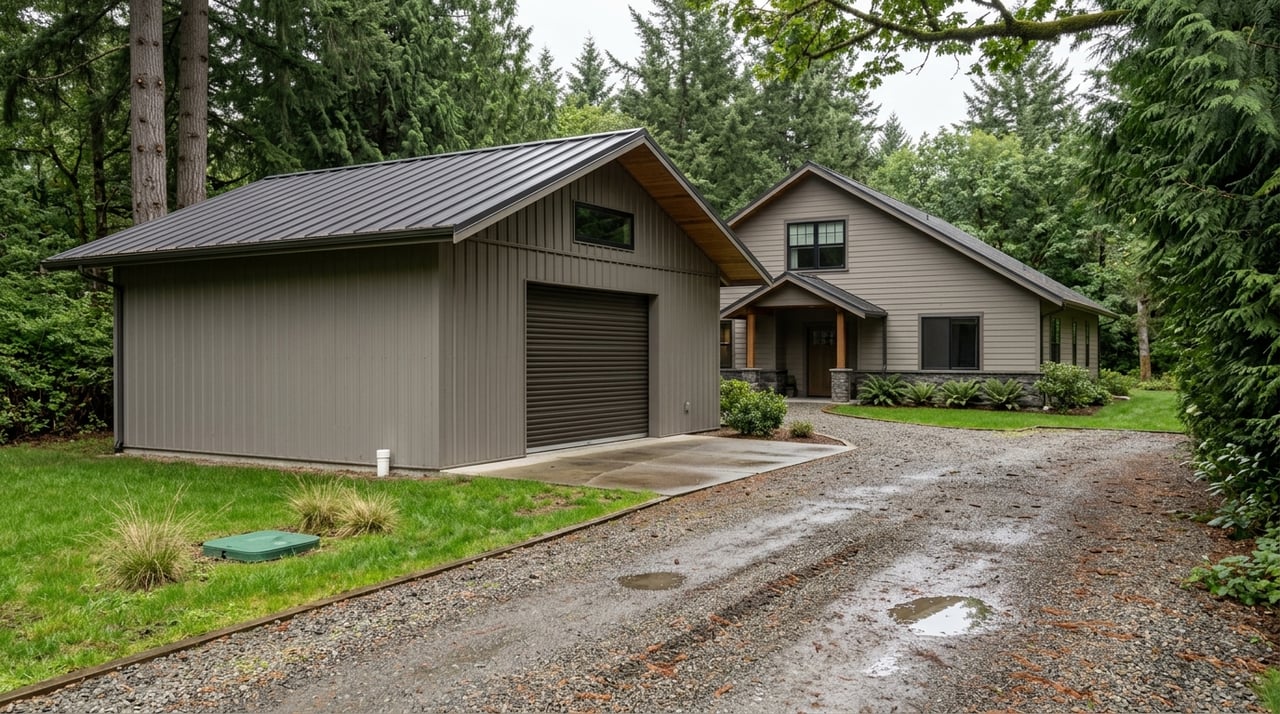
If you are dreaming about more space in Yelm, it is easy to focus on the view, the privacy, or the number of acres on the listing. But with rural and semi-rural property, the real story is often hidden in zoning, water, septic, and access. Before you buy acreage in Yelm, you need to know what can actually be built, used, and financed on the land. Let’s dive in.
Start With Jurisdiction and Zoning
One of the biggest surprises for acreage buyers in Yelm is that many parcels are outside city limits. Thurston County notes that it issues permits for properties in county jurisdiction and in urban growth areas, but if a parcel is not under county jurisdiction, the county does not issue permits for it. That makes jurisdiction one of the first items to confirm before you fall in love with a property.
The Yelm Urban Growth Area, or UGA, surrounds most of the city and covers about 2,300 acres. The joint plan says this area is expected to remain primarily low-density residential, mostly at one unit per five acres, while also allowing agricultural uses and in-home businesses. Over time, parts of the UGA may be served by city utilities and may be annexed, which can affect how you think about future use.
Before planning any project, Thurston County advises buyers to verify zoning and review any mapped critical or environmental areas. County inspections may check for wetlands, flood hazards, shoreline issues, habitat areas, bluffs, aquifer recharge areas, and forested or other critical lands. In practical terms, two five-acre parcels may look similar on paper but have very different building potential.
Water and Septic Often Drive the Decision
With acreage, water and septic are usually the biggest feasibility questions. On raw land, Thurston County treats both as foundational. In many cases, septic approval needs to happen before other permits can move forward.
For a first-time septic permit, the county requires work by a licensed septic designer or professional engineer. Staff review test holes, soils, and the site plan before issuing conditional site approval, and homeowners may not design or install their own septic systems. If you are comparing land options, this is one of the clearest reasons to look beyond the list price.
If the property already has a septic system, the county requires a Time of Transfer process when a home sells. The system must be pumped and inspected within the previous 12 months before the application is submitted. If deficiencies are found, they can delay permits or require repairs.
For wells, Thurston County requires approval of the well location before drilling. The site plan must show the proposed well, the 100-foot sanitary control area, septic components, drainage features, and roads within 200 feet. The well driller must also provide start notification to Ecology and the county before drilling begins.
Water quality matters just as much as water access. Washington State Department of Health recommends that private well owners test annually for coliform bacteria and nitrate, and it notes that arsenic is found in well water throughout Washington. Testing is the only way to know whether it is present.
If a parcel uses a shared well, you will want to review that arrangement carefully. Thurston County says a shared well agreement should be developed, and if separate legal lots share the well, evidence of a well and waterline access agreement must be filed with the Auditor’s Office. Shared systems can work well, but they add another layer of due diligence.
Access Can Change Everything
A beautiful parcel is not very useful if legal or physical access is unclear. Thurston County says many projects require driveway construction that connects to a county road, which is handled through a Public Works encroachment permit. If the driveway connects to an unopened county right-of-way, a Right of Way Access application is needed.
County review can also include ditch crossings, drainage impacts, and sight distance. That means access is about more than whether a dirt path exists today. You need to know whether the road approach is recognized, permitted, and workable for your intended use.
Easements are another key piece of the puzzle. Thurston County advises buyers to check whether an easement already exists, and the Auditor’s Office administers that process. A parcel may depend on a private road, a shared driveway, or a recorded easement, so it is worth verifying these details early.
This is one of the biggest differences between acreage and a typical subdivision lot. In a platted neighborhood, road frontage and utility patterns are usually more established. With acreage, each site needs a more careful review.
Plans for Shops, Barns, or ADUs Need Verification
Many buyers look at acreage because they want flexibility. Maybe you want a shop, a barn, extra storage, or living space for extended household needs. In Thurston County, those possibilities depend on the parcel’s location, size, and permit requirements.
The county lists garages, barns, sheds, shops, septic, and accessory dwelling units as common residential project types. Detached one-story buildings under 400 square feet outside a county UGA, or under 200 square feet inside a UGA, generally do not need a building permit if they have no plumbing or electricity. Even then, zoning and environmental permits may still apply.
For livable extra space, the standards become more specific. In rural unincorporated areas, Thurston County allows one ADU per lot. Detached ADUs are capped at 1,000 square feet, or 1,200 square feet if transferable development rights are used, and they must be within 100 feet of the primary residence, share the primary driveway, and have approved water and septic plus a Certificate of Water Availability.
In the Yelm UGA, up to two ADUs per lot may be allowed under County Title 20 rules, subject to water, septic, and zoning standards. If your long-term plan includes a guest house, multigenerational layout, or flexible living arrangement, these details should be reviewed before you buy.
Septic capacity is especially important here. Thurston County says that if bedrooms, homes, or rental units are added, the septic system must be large enough to accommodate all existing and new wastewater flows before other permits can be issued. In other words, the building may fit on the land, but the septic system still has to support it.
Acreage Value Is About Usability
In Yelm, acreage pricing is not just about how much land you get. Usability often has a bigger impact than raw parcel size. Thurston County’s Assessor says property is appraised at 100% of true and fair market value using a market-calibrated cost approach that treats value as land plus depreciated improvements.
The Assessor also says vacant land sales are used to establish base land rates. Larger tracts are generally valued by the acre, while smaller city lots are usually valued by site or square foot. That helps explain why two similarly sized parcels can have very different market appeal.
Certain physical traits can push value up or down. According to the Assessor, proximity to public sewer and water can increase land value, while poor access, wetlands, steep topography, and irregular topography can reduce it. For buyers, that means the most important question is often not “How many acres?” but “How many usable acres, with what level of readiness?”
The Yelm joint plan supports that site-by-site view. It notes that residential development capacity in the Yelm UGA is a site-specific question. When you combine that with county appraisal guidance, the takeaway is clear: acreage should be evaluated carefully based on access, utility feasibility, critical areas, and intended use.
A Practical Acreage Due Diligence Checklist
If you are considering acreage in Yelm, here are the core items to review before closing:
- Confirm whether the parcel is in county jurisdiction, the Yelm UGA, or another jurisdiction
- Verify zoning and ask about any mapped critical or environmental areas
- Review well status, well location approval needs, and water quality testing history if available
- Review septic approval, system condition, and Time of Transfer requirements for improved property
- Confirm legal access, driveway permit needs, and any recorded easements
- Ask whether planned structures like shops, barns, or ADUs are allowed under current rules
- Look beyond total acreage and evaluate how much of the site is actually usable
Acreage can offer an exceptional lifestyle in the Yelm area, from privacy and open space to room for future plans. The key is making sure the land supports the life you want to build there. Thoughtful due diligence at the beginning can help you avoid expensive surprises later.
When you are weighing a distinctive property purchase, local guidance matters. The team at Morrison House Sotheby's International Realty® offers thoughtful, discreet support to help you evaluate opportunities with clarity and confidence.
FAQs
What should you verify first before buying acreage in Yelm?
- Start by confirming the parcel’s jurisdiction and zoning, because permit authority and allowed uses may differ depending on whether the property is in county jurisdiction, the Yelm UGA, or another area.
Why are water and septic so important for Yelm acreage?
- Thurston County treats well and septic approval as foundational for many projects, and these systems often shape both feasibility and total cost.
Do existing homes on acreage in Yelm need septic review when sold?
- Yes. Thurston County requires a Time of Transfer process, and the septic system must be pumped and inspected within the previous 12 months before the application is submitted.
Can you build an ADU on acreage in Yelm?
- Possibly. Thurston County allows one ADU per lot in rural unincorporated areas and may allow up to two ADUs per lot in the Yelm UGA, subject to applicable water, septic, and zoning standards.
What affects acreage value in Yelm besides parcel size?
- Thurston County’s Assessor indicates that value can be influenced by access, topography, wetlands, and proximity to public sewer and water, so usability often matters more than raw acreage alone.